Current Projects
This project aims to optimize therapeutic transcranial magnetic stimulation (TMS) by systematically investigating the effects of rhythmic visual and auditory co-stimulation.
This project introduces a novel approach that combines repetitive transcranial magnetic stimulation (rTMS) with transcranial electrical temporal interference stimulation (tTIS) to simultaneously target superficial and deep brain regions involved in depression. Through pilot studies, neuroimaging, and a randomized controlled trial, it aims to optimize stimulation protocols, improve therapeutic precision, and identify biomarkers for personalized psychiatric interventions.
This project investigates the ‘pure’ hemodynamic brain response to transcranial magnetic stimulation (TMS) by studying participants who independently undergo forehead botulinum toxin injections, which abolish TMS‑induced muscle contractions. By comparing neuroimaging signals before and after Botox, the study aims to isolate noise in fNIRS recordings and improve signal processing for future concurrent TMS/fNIRS research.
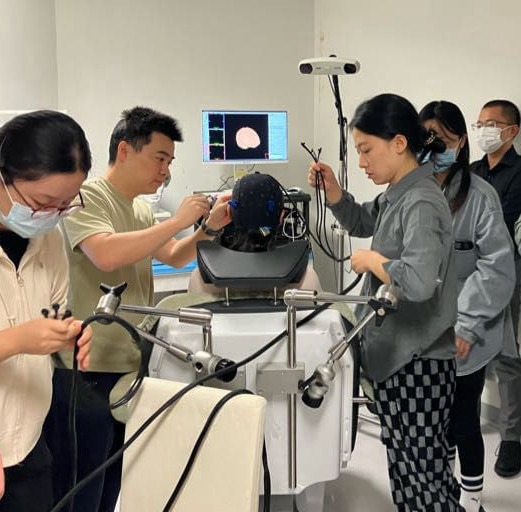
In this project, we systematically investigate intra- and interindividual moderators of therapeutic repetitive transcranial magnetic stimulation (rTMS) effects on prefrontal cortex. We utilize concurrent rTMS/fMRI and concurrent rTMS/fNIRS to cross-validate target engagement. The project is funded by the Mental Health Research Centre (MHRC) of The Hong Kong Polytechnic University.
In this randomized, multicentre, triple-arm, controlled clinical trial, we aim to compare the efficacy of different stimulation intensities in a 4-week treatment of daily intermittent theta-burst stimulation (iTBS) in patients with major depression. The project is funded by the Health and Medical Research Fund (HMRF), the Health Bureau of the Government of the Hong Kong Special Administrative Region of the People’s Republic of China.
In this three-arm pilot study, we will systematically assess the modulatory role of brain state to prefrontal excitability and its effects on the outcome following therapeutic rTMS. In each arm, prolonged intermittent theta burst stimulation (piTBS) of the left DLPFC will be used concurrently with fNIRS. This project is funded by an internal grant of the Department of Rehabilitation Sciences, The Hong Kong Polytechnic University.
In this project, we utilize the combination of functional near-infrared spectroscopy (fNIRS) with brain stimulation to systematically investigate stimulation-induced modulation of blood oxygenation as a proxy for induced brain activity changes. We aim to elucidate the utility of stimulation-induced brain modulation for the prediction of a recurrence of a major depressive episode in patients who are currently remitted from a major depressive disorder. This project is funded by a General Research Fund of the RGC Research Grants Council.
No Code Website Builder